
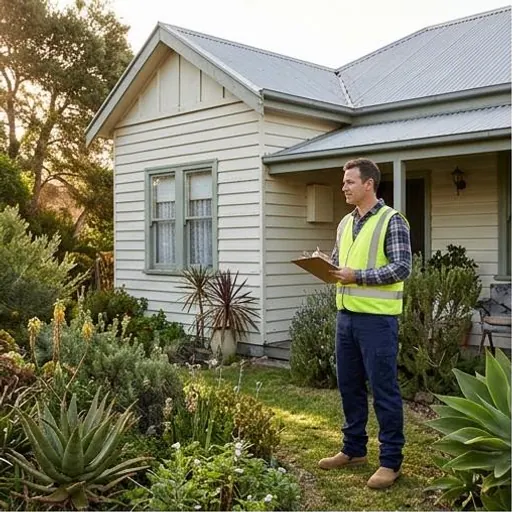
Asbestos Assessment on the Central Coast
Buying, renovating or managing a building? A full assessment tells you what asbestos is there, where, and what to do about it. Inspection and report from $300 inc GST.Prices are a guide only and depend on size, access and condition. Your free on-site quote gives you a fixed price before any work starts.
SafeWork NSW licensed · Free on-site quotes · Fixed price upfront
Central Coast Asbestos Removals assesses whole properties for asbestos: homes before purchase or renovation, rentals, strata buildings and workplaces. You get a written report that maps suspect and confirmed materials, their condition and what we recommend.
A single test answers one question. An assessment answers the bigger one: what does this property contain, and what will it cost to deal with?
Book an asbestos assessment
Send it through and we'll be in touch within 30 minutes.
How it works. Easy as.
Fill out the quick form.
As much or as little detail as you like.
We'll text you within 30 minutes to say hi and get a few details.
We book a site visit at a time that suits you.
A licensed removalist checks the material and measures up, so your quote is accurate and fair.
You get a written quote within 30 minutes of the visit.
Fixed, all-inclusive price. No hidden extras.
Happy with it? Say yes.
Flexible payment options are available if cash flow's a bit tight.
Removal day.
SafeWork NSW licensed removalists take it away safely and leave your place cleaner than they found it.
Done and dusted.
Your asbestos is wrapped, transported and legally disposed of at a licensed facility, with a clearance certificate where required. One less thing to stress about.
Agree on the survey before the visit
An assessment should answer a defined property question. Are you buying a home, planning a renovation, preparing a demolition scope or managing an occupied workplace? Tell us which decision the report needs to support. That lets us distinguish a survey of accessible materials from an investigation that may need access behind finishes before building work begins.
Send any existing plans, previous sample results, earlier asbestos reports and a description of additions or renovations. These records help us understand the building, but they do not replace checking its current condition. A previous report may cover only one room or one stage of work, and a later extension may introduce a different set of materials.
We agree on the parts of the property included in the visit and note practical access limits. Let us know about locked outbuildings, tenant access, ceiling spaces, restricted plant areas and rooms that cannot be entered. A clear scope at booking is more useful than discovering afterwards that the report did not cover the area your builder needs.
Accessible survey versus intrusive investigation
A normal occupied-property inspection is limited by what can safely be reached and viewed. It should not be read as a promise that every concealed surface has been opened. Wall cavities, backing layers, enclosed roof details and areas behind fixed equipment may remain outside that scope.
Renovation or demolition can require a more targeted investigation of the materials that the work will disturb. The access and safety arrangements for that investigation need to be agreed in advance. Opening a building is not a casual extra to an inspection; it can affect occupants, services and the sequence of other trades.
The report should make inaccessible and uninspected areas obvious. Where a material cannot be confirmed, it should explain the uncertainty and what further step is needed. Your builder can then plan around a known limitation rather than interpreting an empty space on a plan as an asbestos-free area.
What makes the written report useful
A practical report connects a material to a place you can find again. Room names, building locations, photographs and sample references should make the findings understandable to the owner and the next trade. A list of positive results without clear locations leaves too much room for confusion.
Condition and the likelihood of disturbance matter alongside identification. A stable material outside the proposed work may call for a different management decision from a damaged lining directly in the renovation path. Recommendations should explain the next action rather than treating every finding as the same job.
Keep the report's purpose, inspection date and limitations with its findings. Share the complete document, not only a screenshot of the result page. When a builder or removal team receives the full scope and location information, they can price and plan the work against the same facts.
A workplace register is a living record
For a workplace, check the asbestos-register and management-plan duties with the person who has management or control of the premises. SafeWork NSW's guidance explains the applicable responsibilities. An inspection report can provide information for that process, but it is not automatically a complete management system.
A useful register identifies known or presumed asbestos and remains available to people whose work could disturb it. A management plan sets out how the material will be managed, who is responsible and how work is controlled. Ask which documents your assessment includes and which decisions remain with the workplace duty holder.
Review the records when the building, its condition or the work changes. New damage, newly exposed material, refurbishment and completed removal can all make an old description incomplete. Keep removal and clearance records with the register so a later contractor is not sent to investigate material that has already been removed, or told that an uninspected area is clear.
Air monitoring answers a different question
A material sample identifies what a building product contains. Air monitoring addresses airborne fibres during the circumstances covered by that monitoring. It does not replace a building survey or prove that every sheet in a property is free of asbestos.
Whether monitoring is required or appropriate depends on the material, its condition and the type of work. Friable removal and bonded-sheet work do not have identical controls. The assessment and removal scope should explain the relevant requirements rather than adding monitoring as an unexplained line item or promising it for every job.
If you have a concern about damaged material, tell us what happened and keep the area undisturbed. We can explain which investigation is relevant. Do not assume that a single air result makes it safe to continue cutting or stripping a material that has not been identified.
Use the findings to brief the removal team
The assessment is most useful when its recommendations turn into a clear work scope. Identify the materials to be removed, the areas staying in place, any access limits and the building work that follows. Ask the quote to explain removal, wrapping, transport, disposal and the inspection or clearance arrangements that apply.
A positive finding does not mean all work must be done in one visit. The right sequence depends on condition, the renovation plan and which materials will be disturbed. Discuss staging before booking so the report, quote and builder's program describe the same boundaries.
After removal, retain the relevant clearance and disposal documents alongside the assessment. Update any register or property record affected by the work. The original report remains evidence of what was found at the inspection, while the later records explain what has changed.
Testing or assessment?
Testing checks one material. An assessment surveys the whole property and puts it in a report. If you only want to know about the fence, start with asbestos testing. If you are planning work across the house, an assessment avoids nasty surprises halfway through.
Three times it pays off
- Before buying: building and pest inspections generally don't include asbestos sampling. A report gives you a removal budget before contracts are signed.
- Before renovating: your builder knows what they can and can't touch, and the removal can be scheduled first.
- After damage: storm, fire or water damage can disturb old materials. An assessment tells you what is safe and what is urgent.
What we look at
Roofs, eaves, gutters, external cladding, fences, wet areas, ceilings, floor coverings and outbuildings. We note anything we can't access, such as sealed wall cavities, so you know what the report does and doesn't cover.
Registers and management plans for workplaces
In NSW, a person who manages or controls a workplace must keep an asbestos register, and a written management plan where asbestos is present (SafeWork NSW). The register must be reviewed and updated, including when work is done that may disturb asbestos.
For commercial sites, see commercial asbestos removal.
If asbestos is found
Intact, undisturbed material is often left in place and managed. Damaged material, or anything in the way of planned work, is removed by a licensed removalist. We give you a fixed price for the removal, separate from the report.
Assessment guide prices (inc GST)
| Job | Typical price (inc GST) | Guide link |
|---|---|---|
| Inspection and written report | From $300 Prices are a guide only and depend on size, access and condition. Your free on-site quote gives you a fixed price before any work starts. | Full guide |
| Lab analysis | From about $50 per sample Prices are a guide only and depend on size, access and condition. Your free on-site quote gives you a fixed price before any work starts. | |
| Sampling visit | From $200 Prices are a guide only and depend on size, access and condition. Your free on-site quote gives you a fixed price before any work starts. | |
| Commercial, strata and large sites | Quoted on site Prices are a guide only and depend on size, access and condition. Your free on-site quote gives you a fixed price before any work starts. |
Got more than one asbestos job? Book them together on the same visit and they can share one clearance inspection instead of paying for a separate one each time. That means a fence, shed roof and eaves on the same property add up to a real saving.
All prices include GST. Every removal quote sets out removal, wrapping, transport, disposal and clearance before work starts.
Prices are a guide only and depend on size, access and condition. Your free on-site quote gives you a fixed price before any work starts.